
Outlet or switch replacement
Price changes with the number of devices, wiring condition in the box, and whether GFCI or AFCI protection is needed for the location.
Serving Ashburn, Virginia & surrounding areas
24/7 Response • Answered live
One call instead of ten No web forms, no callback spam 24/7 Emergency Response

Electrical estimates · Ashburn, Virginia
Get clear, written estimates that spell out the scope, parts, permits (if needed), and what will change your total before the work starts.
Clear written estimates
If you are searching electrician cost Ashburn VA, you are usually trying to answer two questions: what a typical job runs, and how to avoid surprise add-ons once someone arrives. The honest answer is that electrical pricing is mostly scope-based. Two jobs that sound similar—such as replacing an outlet—can price differently depending on access, wiring condition, and whether anything else must meet today’s safety standards.
A solid estimate should be written and clearly state:
When Ashburn homeowners compare pricing, the biggest mistake is comparing a quick quote with a detailed scope—or a basic replacement with a repair that requires troubleshooting. A clear scope makes the electrician cost discussion much simpler.
If you also want a quick sense of how we approach estimating and scheduling locally, you can start with Electrician Ashburn VA and then request a written scope for your specific job.
Local pricing guidance
In Ashburn, electrician cost typically runs about $150 to $350 for small repairs and straightforward replacements, while larger troubleshooting, new circuit work, or panel-related projects more often land in the $500 to $2,500+ range depending on scope. A simple fixture swap is usually on the lower end; adding a new circuit, running wire through finished spaces, or making code-required corrections pushes pricing up.
Your final price depends on access, the distance and difficulty of the wire run, panel capacity and breaker type, whether AFCI or GFCI protection is required, and how much diagnosis is needed before the fix is confirmed. The exact cost is verified after an on-site evaluation of the wiring and work area.
Property-specific pricing
Electrical work gets expensive when the job stops being a simple swap and turns into access, diagnosis, or capacity planning.
Intermittent tripping, flickering lights, or partial power loss can be fast to isolate, or take longer when multiple circuits or multi-wire branch circuits are involved. A good electrician explains what was tested and why.
Costs change based on the panel brand and exact breaker required. Some homes need specialty AFCI or GFCI breakers that cost more than a standard breaker.
Running cable in finished spaces can involve fishing walls, working in attics, or opening and repairing drywall. The same circuit in open framing is usually quicker and less expensive.
Some upgrades trigger additional safety requirements. Outlets in certain areas may require GFCI protection, while many bedroom and living-area circuits involve AFCI protection.
Much of Ashburn’s housing is townhouse-style. Shared walls, limited attic paths, and tight utility rooms can affect labor time and the routing plan.
When requesting an estimate, share photos of the panel label, work area, and any failing device. That often helps the electrician arrive with the right parts and a realistic plan.
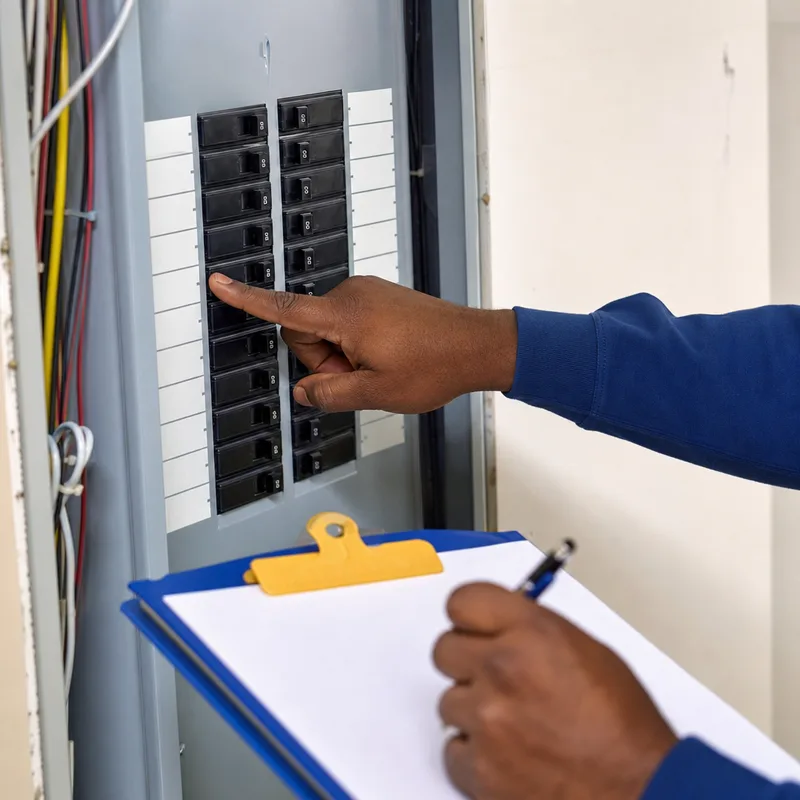
Project pricing factors
Price changes with the number of devices, wiring condition in the box, and whether GFCI or AFCI protection is needed for the location.
A direct replacement is usually simpler. Adding a fan-rated box, new switch leg, or balancing and remote setup adds time.
Troubleshooting cost depends on whether the cause is a failed device, loose connection, overloaded circuit, or wiring fault that takes longer to isolate.
Pricing is driven by run length and access, panel capacity, and whether the route requires finished-wall fishing or exterior conduit.
The total varies with panel capacity, distance to the garage, and whether a load calculation or service upgrade is needed first.
Scope can include replacing the panel, addressing grounding and bonding, reworking circuits, and scheduling required inspections where applicable.
We start with what you are seeing—such as a breaker that trips, a buzzing switch, or dimming lights—and what you want the end result to be.
We check the panel, circuit path, device box, and signs of heat or loose connections, then account for GFCI or AFCI protection when the scope calls for it.
You get a written description of what is included, what is excluded, and any optional upgrades so you can compare bids correctly.
We price the work based on actual conditions, including finished surfaces, wire-routing complexity, and parts required for your panel and devices.
After completing the work, we test operation, confirm protection devices function, and explain what changed and what to watch for.
“The estimate was detailed enough that I could compare it to another quote line by line. The final invoice matched the scope we agreed to, and the electrician explained why one circuit kept tripping instead of just swapping parts.
“We had a few small items plus one bigger issue at the panel. They separated what was required from what was optional and gave pricing for both, which made budgeting straightforward.
Questions before scheduling
Because many electrical problems share the same symptoms, a diagnostic visit is often the only way to confirm the cause and write an accurate scope. A tripping breaker could indicate overload, a failing device, a loose neutral, or a damaged cable, and each repair has a different labor and parts cost.
Photos of your open electrical panel, the work area, and any failed device help most. Sharing when the issue began, what else was running, and whether the problem is intermittent can reduce troubleshooting time and tighten the estimate.
Yes, permits and inspection coordination can add cost when required, such as for certain panel or service changes. Requirements depend on the exact work and local Loudoun County rules. A written estimate should state who handles the permit and inspection scheduling.
Not always. Flat-rate pricing can work well for defined tasks, while time and materials can be fair for open-ended troubleshooting. The best approach is the one with a clear scope and an explanation of what happens if hidden conditions appear.
Sometimes, but compatibility and quality matter. Confirm that supplied parts match your wiring and application, such as a fan-rated box for a ceiling fan or the correct breaker type for your panel. Troubleshooting can take longer if a supplied part is defective or incompatible.
Vague scope language is the biggest red flag. If an estimate does not specify device counts, whether new wiring is included, whether wall fishing is assumed, and what happens if code-required GFCI or AFCI protection is needed, the price can change significantly once work begins.
Plan with confidence
Tell us what you are planning or what is failing, and we will provide a written scope and a realistic price range for your Ashburn home so you can make decisions with confidence.