
!
Breaker trips that repeat
A breaker that trips again after a reset usually points to an overloaded circuit, a short, a ground fault, or a failing breaker. Treat it as a diagnostic clue, not a nuisance.
Serving Ashburn, Virginia & surrounding areas
24/7 Response • Answered live
One call instead of ten No web forms, no callback spam 24/7 Emergency Response
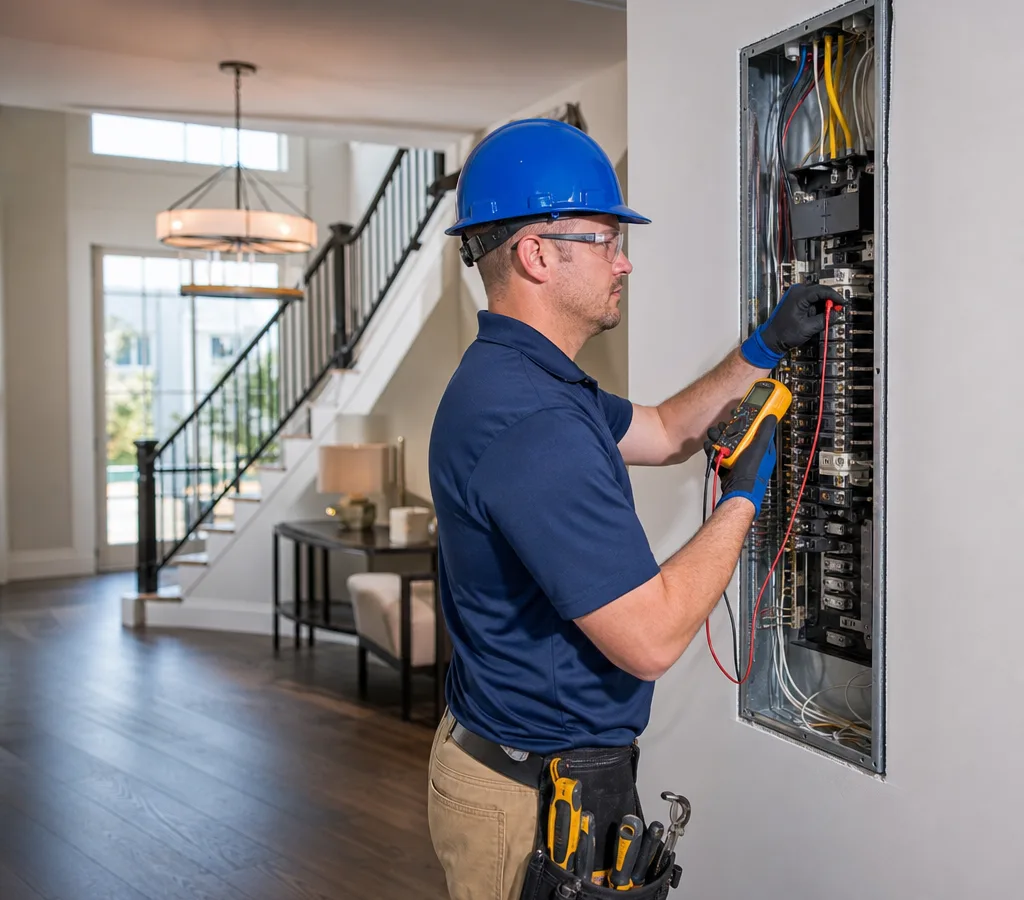
Electrical troubleshooting · Ashburn, Virginia
If something feels off with your power, don't wait for it to turn into a fire or a shock hazard. Get a focused inspection, clear answers, and safe repairs that match today's electrical code.
Know what your system is telling you
Homeowners searching for electrical warning signs Ashburn VA are usually noticing something that doesn't match how a healthy electrical system behaves: lights that misbehave, outlets that feel wrong, breakers that won't stay on, or smells you can't explain. Those symptoms are your system telling you there is heat, arcing, overload, water intrusion, loose connections, or a failing device somewhere along the circuit.
Electricity problems rarely fix themselves. They often progress, because heat increases resistance and resistance creates more heat. A loose lug in a panel, a backstabbed receptacle that's failing, or a damaged conductor in a device box can go from “annoying” to “dangerous” fast.
Electrician Ashburn VA troubleshoots these issues at the source, not by swapping parts until something seems better. The goal is simple: identify the cause, correct it safely, and leave you with a system that operates predictably.
Signs that need attention
A breaker that trips again after a reset usually points to an overloaded circuit, a short, a ground fault, or a failing breaker. Treat it as a diagnostic clue, not a nuisance.
Warmth can mean a loose connection, arcing, or an overloaded device on that circuit. Heat at a receptacle is one of the clearest early warnings of a future failure.
Sounds from outlets, switches, fixtures, or a panel often indicate arcing or a loose termination. That is a shock and fire risk and needs prompt attention.
A hot, plastic smell or discoloration on an outlet, switch, or panel component can mean overheated insulation or arcing. Turn off the affected circuit and get it checked.
Momentary dimming can be normal, but persistent dimming, flicker, or uneven brightness may indicate voltage drop from loose connections, undersized conductors, or service issues.
Even a mild tingle can signal improper grounding, reversed polarity, or a damaged device. This is a safety issue, not something to live with.
Immediate safety steps
If you smell burning, hear sizzling, see smoke, or notice a hot outlet or panel, treat it like an emergency. Shut off the circuit at the breaker if it is safe to do so, and avoid touching metal parts or using that outlet until it is inspected.
If a breaker trips repeatedly, unplug loads on that circuit and leave the breaker off. Repeated resets can make damage worse if the underlying issue is a short or arcing fault.
For flickering lights, don't assume it's always a bulb. Pay attention to whether the flicker happens in one room or across the house, whether it's tied to HVAC cycling, or whether it started after a new appliance was installed. Those details help pinpoint the problem faster.
If you need a local electrician for diagnosis in Ashburn, start with electricians in Ashburn VA who can provide a clear, code-based explanation of what failed and what it takes to correct it.
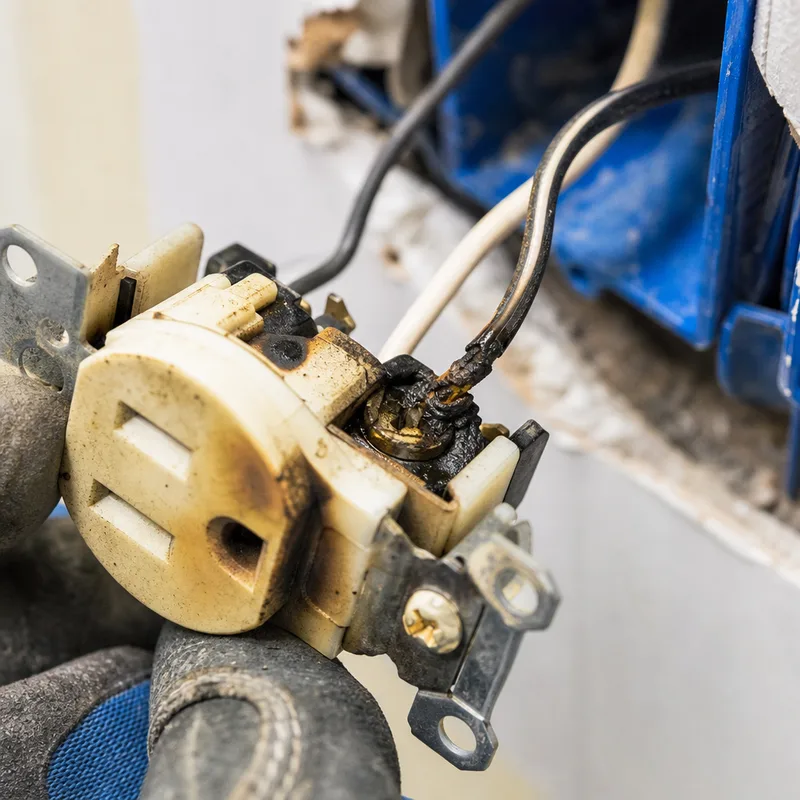
We start with what you observed—when it happens and what devices are involved—and look for immediate hazards like overheating, arcing signs, water exposure, or damaged devices.
We identify the affected circuits, confirm proper polarity and grounding, and test for voltage drop, load issues, and faulty connections using appropriate meters and test procedures.
Common failure points include loose terminations at receptacles and switches, damaged conductors in a box, failing breakers, bad neutral connections, and worn devices. The goal is to find the exact point causing heat or interruption.
Repairs can include re-terminating conductors, replacing devices, correcting grounding and bonding issues, replacing a failing breaker, or addressing damaged wiring. Work is performed to current safety standards for the specific situation.
After the repair, we retest the circuit under load, confirm proper operation, and explain what happened and what to watch for going forward.
Local electrical conditions
Electrical issues in Ashburn often come down to a few practical realities: homes with multiple high-draw loads—EV charging, newer HVAC equipment, and added basement circuits—frequent device use, and the normal aging of connections and components. Even in newer construction, a single loose termination behind an outlet can create heat and intermittent power.
In neighborhoods with a mix of older and newer homes, it's also common to see a patchwork of changes over time. A homeowner swaps a light fixture, a handyman adds a receptacle, an appliance gets upgraded, and the original circuit design gets pushed harder than intended.
Weather can be a factor too. In Northern Virginia, storms and outages can expose weaknesses: a breaker that was already marginal may fail after a few hard resets, and surges can damage sensitive devices.
If the warning signs are pointing toward service equipment or an aging panel, a focused evaluation may lead into broader electrical panel decisions. That deeper scope belongs with electrical panel replacement when it's actually needed, rather than treating a symptom with repeated breaker resets.
Troubleshooting costs
Most troubleshooting visits in Ashburn typically range from $150 to $450 for diagnosis and a straightforward repair such as replacing a device, re-terminating a loose connection, or swapping a standard breaker. More involved issues, like tracing an intermittent fault across multiple junction points or repairing heat-damaged conductors, often run $500 to $1,500+.
Your price depends on how long it takes to locate the fault, whether parts need replacement, access to boxes and fixtures, and what condition the wiring and panel are in. The exact cost is confirmed after the on-site inspection and test results.
“We had a burning smell near one outlet and a breaker that started tripping. They found a loose connection that had overheated, replaced the receptacle, and checked the rest of that circuit. The explanation was clear and the fix felt genuinely safe.
“Lights in our kitchen were flickering randomly for weeks. The issue ended up being a bad neutral connection in a device box. Once it was corrected, everything stabilized immediately.
Questions before scheduling
No, but frequent flicker is worth checking when it is not isolated to one bulb or one fixture. If multiple lights flicker, lights dim when appliances start, or you also notice buzzing or warm switches, the cause is often a loose connection, voltage drop, or a failing device on the circuit.
Yes, intermittent trips can still indicate a real hazard. A breaker can trip from an overloaded circuit, a loose connection that heats under load, or a developing short that shows up only when a device cycles on, like a microwave or HVAC blower.
Buzzing can be normal in small amounts, but loud or new buzzing is a red flag. It may indicate a loose breaker connection, arcing, or a problem on the bus or service conductors, and it should be evaluated promptly because heat can build inside the panel.
A warm outlet or switch should be treated as urgent because it often points to resistance heating at a loose termination or a failing device. Stop using that outlet, turn off the circuit if you can do so safely, and schedule a diagnostic visit to find the source of heat.
Replacing a breaker can expose you to shock hazards and can mask a deeper issue if the breaker is doing its job. A proper approach is to diagnose whether the trip is from overload, short, or ground fault first, then replace parts only when testing supports it.
Many problems can be diagnosed in a single visit when symptoms are repeatable and devices are accessible. Intermittent faults, hidden junction points, or issues that only occur under specific loads can take longer, but a systematic test process usually narrows it down quickly.
Schedule a focused inspection
Describe what you're seeing, smelling, or hearing, and we'll schedule a safe, focused troubleshooting visit in Ashburn. You'll get a clear explanation of the cause and a repair plan that matches code and the way you use your home.